The Number That Shapes Every Budget
Property taxes are the annual cost that never goes away. Unlike a mortgage, which you eventually pay off, property taxes continue for as long as you own the home. Understanding how they work, what you will actually pay, and how Connecticut and Rhode Island differ is essential to making a smart buying decision.
For buyers comparing properties in Woodstock CT and Charlestown RI, the differences in how each state calculates and collects property taxes can significantly affect your monthly budget. This guide cuts through the confusion and gives you the real numbers.
How Connecticut Property Taxes Work
Connecticut uses a mill rate system. One mill equals $1 of tax per $1,000 of assessed value. The assessed value in Connecticut is set at 70% of the property's fair market value, as determined by the most recent town-wide revaluation.
The Woodstock Numbers
Woodstock's mill rate for the current fiscal year is approximately 26.5 mills. Here is how that translates to actual tax bills:
| Market Value | Assessed Value (70%) | Annual Tax (26.5 mills) | Monthly | |---|---|---|---| | $300,000 | $210,000 | $5,565 | $464 | | $400,000 | $280,000 | $7,420 | $618 | | $500,000 | $350,000 | $9,275 | $773 | | $600,000 | $420,000 | $11,130 | $928 |
How Woodstock Compares to Neighbors
Mill rates vary significantly across northeastern Connecticut towns. Here is how Woodstock stacks up:
| Town | Approximate Mill Rate | |---|---| | Eastford | ~24 mills | | Pomfret | ~27 mills | | Woodstock | ~26.5 mills | | Thompson | ~25 mills | | Putnam | ~30 mills | | Brooklyn | ~29 mills |
Woodstock falls in the middle of the pack for the region, which reflects a balance between the quality of services (including the Woodstock Academy tuition that the town covers for resident students) and a relatively modest tax base spread across a large geographic area.
Revaluation Cycles
Connecticut towns conduct property revaluations on a schedule, typically every five years. When a revaluation occurs, your assessed value may increase or decrease based on current market conditions. If your assessed value increases but the mill rate stays the same, your tax bill goes up. Towns often adjust the mill rate downward after a revaluation to prevent a windfall of additional revenue, but the adjustment rarely offsets the full increase for properties that have appreciated significantly.
If you are buying in Woodstock, ask when the last revaluation occurred and when the next one is scheduled. Buying just before a revaluation in a rising market could mean a meaningful tax increase in the near future.
How Rhode Island Property Taxes Work
Rhode Island assesses properties at full market value (100% of fair market value in most communities) and applies a tax rate per $1,000 of assessed value. The approach is more straightforward than Connecticut's 70% assessment ratio, but the result is similar: a percentage of your home's value is owed in taxes annually.
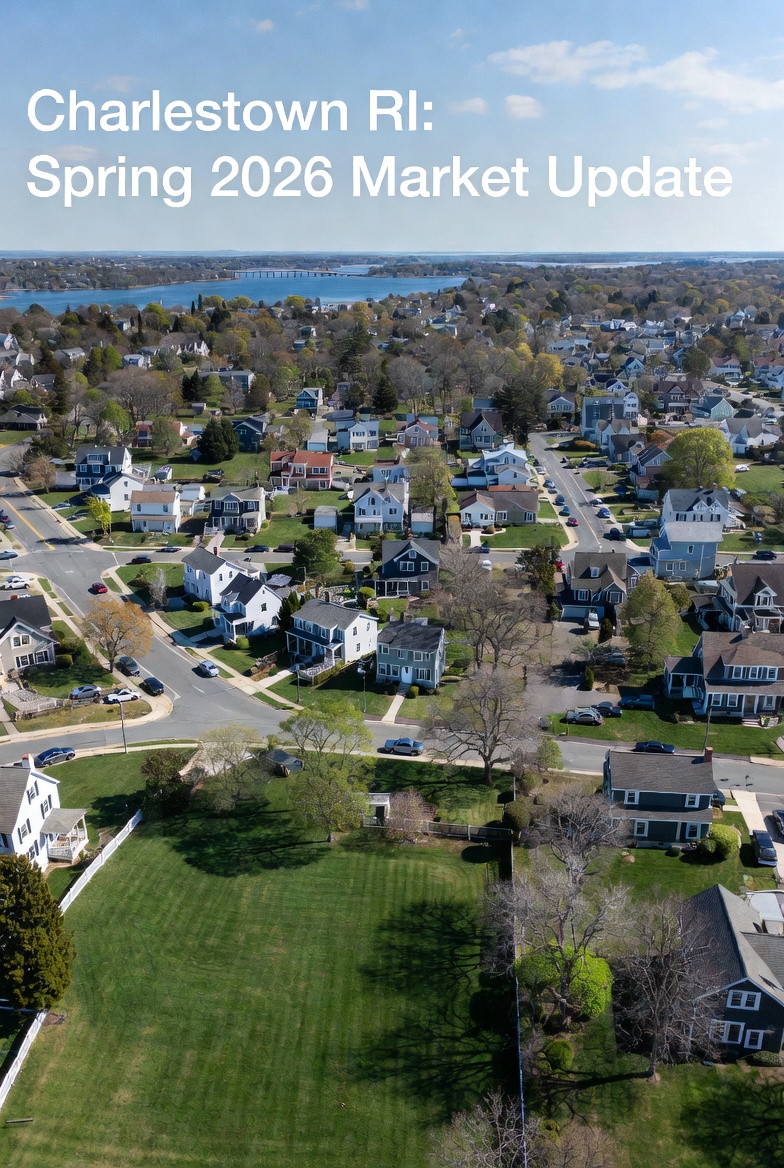
The Charlestown Numbers
Charlestown's tax rate is approximately $12 to $14 per $1,000 of assessed value for residential properties. The exact rate depends on whether the property is classified as a homestead (primary residence) or non-homestead (seasonal, rental, or investment property). Homestead properties receive a lower rate, which is an important distinction for buyers.
| Market Value | Homestead Rate (~$12/$1,000) | Non-Homestead Rate (~$14/$1,000) | |---|---|---| | $400,000 | $4,800 | $5,600 | | $500,000 | $6,000 | $7,000 | | $600,000 | $7,200 | $8,400 | | $800,000 | $9,600 | $11,200 |
Charlestown vs. Neighboring Towns
| Town | Approximate Tax Rate (per $1,000) | |---|---| | Charlestown | ~$12-14 | | Westerly | ~$14-16 | | South Kingstown | ~$16-18 | | Narragansett | ~$13-15 | | Richmond | ~$15-17 |
Charlestown's rates are competitive for southern Rhode Island, particularly for a coastal community with beach access, conservation areas, and quality municipal services. The relatively low rate is one of the factors that makes Charlestown attractive to buyers compared to neighboring coastal towns.
Homestead Exemption
Rhode Island offers a homestead exemption that reduces the tax burden for primary residents. In Charlestown, the homestead rate is meaningfully lower than the non-homestead rate, which matters significantly for buyers who plan to live in the home year-round versus those purchasing seasonal or investment properties.
To qualify, you must occupy the home as your primary residence and file the appropriate documentation with the town. If you are converting a seasonal property to year-round use, updating your homestead status should be one of your first steps after closing.
Connecticut vs. Rhode Island: The Bottom Line
For buyers considering properties in both states, here is the direct comparison on a $400,000 home:
| Factor | Woodstock CT | Charlestown RI | |---|---|---| | Assessment basis | 70% of market value | 100% of market value | | Assessed value | $280,000 | $400,000 | | Tax rate | 26.5 mills | ~$12/$1,000 (homestead) | | Annual tax | ~$7,420 | ~$4,800 | | Monthly tax | ~$618 | ~$400 |
On a dollar-for-dollar comparison at the same home price, Charlestown RI has a lower effective tax rate than Woodstock CT. However, home prices in Charlestown are significantly higher (average value $617,861 vs. Windham County's $315,518), so the actual tax bills on typical purchases may be comparable.
What Property Taxes Pay For
Understanding where your tax dollars go helps contextualize the rates.
In Woodstock
The largest portion of Woodstock's property tax revenue goes to education, including the town's tuition payments to Woodstock Academy. Other significant allocations include:
- Road maintenance and snow removal
- Volunteer fire department support
- Transfer station operations
- Town government and administration
- Parks, recreation, and library
- Land use and planning
In Charlestown
Charlestown's tax revenue supports:
- Chariho Regional School District (shared with Richmond and Hopkinton)
- Beach and conservation area maintenance
- Police department
- Fire district
- Road maintenance
- Town services and administration
- Parks and recreation, including Ninigret Park
Tax Appeals: When the Assessment Is Wrong
If you believe your property's assessed value does not accurately reflect its market value, both states allow you to appeal.
In Connecticut: File a written appeal with the Board of Assessment Appeals within the designated filing period (typically February or March). You will need to present evidence such as recent comparable sales, an independent appraisal, or documentation of property condition issues that affect value. If the board denies your appeal, you can escalate to Superior Court.
In Rhode Island: Contact the assessor's office to request a review. If unsatisfied, file a formal appeal with the local tax board of review. Further appeals go to Superior Court. The timeline and procedures vary by municipality, so check with Charlestown's assessor for specific deadlines.
In either state, appeals are most successful when you have concrete evidence that comparable properties are assessed lower relative to their market value, or when a property condition issue (such as a failed septic system, structural damage, or environmental contamination) has not been reflected in the assessment.
Tax Implications for Buyers
First-Time Buyers
If you are a first-time buyer, remember that property taxes are part of your monthly mortgage payment (held in escrow by your lender). Your lender will estimate the taxes and include them in your monthly payment, which means the property tax is not a separate bill you need to budget for independently. However, if the initial estimate is too low, your escrow analysis will result in a higher monthly payment the following year.
When You Close Matters
In both states, property taxes are prorated at closing. If you close mid-year, the seller pays their portion of the year's taxes through the closing date, and you are responsible for the remainder. Your closing cost breakdown will include these prorations, but it is worth understanding how they affect your upfront cash needs.
Investment Properties
For buyers purchasing rental or vacation properties in Charlestown, the non-homestead tax rate applies, which is higher than the homestead rate. Factor this into your investment calculations, because the difference of $2 to $3 per $1,000 of assessed value can amount to $1,000 to $2,400 per year on a $500,000 to $800,000 property.
The Takeaway
Property taxes are one of the largest ongoing costs of homeownership, and they differ meaningfully between Woodstock CT and Charlestown RI. Neither town is excessively taxed compared to their respective regions, and both offer genuine value for the services and quality of life that your tax dollars support. The key is to know the exact number before you buy, not after, and to factor it accurately into your monthly budget alongside your mortgage, insurance, and maintenance costs.
Want to understand the full cost of owning in Woodstock or Charlestown? MLD Realty provides comprehensive cost analyses that include taxes, insurance, and every other carrying cost. Contact us for a clear picture before you buy.