The Appeal of a Blank Canvas
There is a particular kind of buyer who comes to the Quiet Corner and does not want an existing home. They want land. They want to stand on a hilltop, look across a meadow bordered by stone walls, listen to nothing but wind and birds, and say: "This is where I will build."
Northeastern Connecticut offers some of the most beautiful and affordable land in all of New England. Rolling terrain, mature hardwood forests, working farmland, river frontage, and the kind of scenic views that other regions reserve for millionaires are available here at prices that make the dream of building a custom home genuinely achievable.
But buying land is fundamentally different from buying an existing home. There is no house to inspect, no furnace to evaluate, no kitchen to admire. Instead, there is soil to test, regulations to navigate, utilities to plan, and a building process to manage that can take 12 to 24 months from purchase to move-in. Understanding these variables before you buy is the difference between a smooth build and a nightmare.
What Land Costs in the Quiet Corner
Land prices in northeastern Connecticut vary significantly based on location, road frontage, acreage, and the presence (or absence) of buildable characteristics.
General Price Ranges
- Buildable lots with road frontage and confirmed perc (1-3 acres): $50,000 to $120,000
- Larger parcels with building potential (5-10 acres): $75,000 to $200,000
- Premium parcels with views, water features, or exceptional character (10+ acres): $150,000 to $400,000+
- Undeveloped or landlocked parcels without confirmed buildability: $5,000 to $25,000 per acre
The most important distinction in land pricing is between "buildable" and "potentially buildable." A parcel that has been confirmed as buildable, meaning it has passed a perc test, has adequate road frontage, and is free of wetland restrictions, commands a significant premium over raw land with unknown buildability. That premium exists for a good reason: it removes the biggest risk in the entire transaction.
The Perc Test: The Single Most Important Factor
A perc test, short for percolation test, determines whether the soil on a parcel can support a septic system. In rural Connecticut, where there is no municipal sewer service, every new home needs a septic system, and every septic system needs soil that drains properly.
How It Works
A soil scientist or licensed professional digs test holes at designated locations on the parcel, typically where the septic system's leach field would be installed. They evaluate the soil composition, observe how quickly water drains through the soil, and determine whether the drainage rate meets the requirements of the Connecticut Department of Public Health under Title 19.
Why It Matters
If the soil does not perc, you cannot build a conventional septic system. Without a septic system, you cannot get a building permit. Without a building permit, the land is essentially unbuildable for residential use.
Cost: $500 to $1,500 depending on the number of test holes and the complexity of the site
Timing: Schedule perc tests during favorable conditions (spring and fall are ideal). Frozen ground, drought, or saturated soil from heavy rain can affect results. The test should be done before you finalize the purchase, ideally as a contingency in your offer.
Alternative Systems
If the soil does not support a conventional septic system, alternative systems such as mound systems or advanced treatment units may be an option. These systems are more expensive ($25,000 to $50,000 or more) and require additional permitting, but they can make otherwise unbuildable land viable. Consult with a septic engineer before assuming a failed perc test is a deal-breaker.
Road Frontage and Access
Connecticut zoning regulations require a minimum amount of road frontage on a town-accepted road for any buildable lot. In most Quiet Corner towns, this minimum is 200 feet or more, depending on the zoning district.
What Counts as Road Frontage
The road must be a public road that the town maintains. Private roads, logging roads, and trails do not count unless they meet specific town standards and have been formally accepted by the municipality.
Landlocked Parcels
Land without road frontage is significantly cheaper, but it presents major challenges:
- You will need a deeded right-of-way (easement) across another property to access your land
- Building a driveway through someone else's property requires negotiation, legal agreements, and potentially significant construction costs
- Emergency vehicle access must meet local fire code requirements
- Utility connections (electric, phone, internet) may require crossing neighboring properties
Landlocked parcels can be excellent investments if you also own the adjacent property with road frontage, or if a right-of-way can be secured. Otherwise, they carry risks that most buyers should avoid.
Wetlands and Environmental Review
Northeastern Connecticut is laced with brooks, streams, ponds, and wetlands. These features add beauty and character to a property, but they also trigger regulatory review that affects where and what you can build.
Connecticut Inland Wetlands and Watercourses Act
Any activity within a regulated area (typically 100 to 200 feet from a wetland, watercourse, or vernal pool) requires a permit from the town's Inland Wetlands Commission. This includes:
- Building construction
- Driveway installation
- Grading and excavation
- Tree clearing
- Septic system installation
Timeline
Wetlands review adds 30 to 65 days to the permitting process, sometimes more if the project is complex or if the commission requests additional information. This is a predictable timeline that should be factored into your building schedule, not a surprise.
What to Check Before Buying
- Request a wetlands delineation before purchasing. A soil scientist walks the property and flags all wetland boundaries, giving you a clear map of where you can and cannot build
- Check for vernal pools (seasonal pools that support amphibian breeding). These are protected and carry their own buffer zones
- Identify all watercourses, even seasonal ones. A dry streambed in August may be a flowing brook in April, and the regulations apply year-round
Utilities: Nothing Is Automatic
Unlike a subdivision or a suburban lot, raw land in rural Connecticut does not come with utilities waiting at the property line. You are responsible for arranging and often paying for every utility connection.
Electricity
Eversource serves most of northeastern Connecticut. If the nearest power line is at the road and your building site is close to the road, the connection is relatively straightforward and may be partially covered by the utility. If your building site is 500 feet or more from the road, the cost of running power to the house can add $10,000 to $30,000 or more, depending on the distance and whether the line runs overhead or underground.
Internet and Phone
Verify availability at the specific address before building. If broadband is not available, factor in the cost of Starlink ($599 equipment plus $120 per month) as your primary internet solution. Our guide to remote work in the Quiet Corner covers internet availability in detail.
Water and Sewer
There is no municipal water or sewer. You will drill a private well ($5,000 to $15,000) and install a septic system ($15,000 to $30,000). Both are standard for new construction in the area, and your builder will coordinate these installations as part of the overall project.
Zoning: Know Your Zone Before You Buy
Each town in northeastern Connecticut has its own zoning regulations, and they dictate:
- Minimum lot size: Typically 1 to 2 acres for residential construction
- Setback requirements: How far your home must be from property lines, roads, and water features
- Building height limits: Usually 35 feet maximum
- Accessory structures: Rules about barns, garages, workshops, and accessory dwelling units
- Permitted uses: Residential, agricultural, commercial, or mixed-use
Visit the town's planning and zoning office (or their website) to obtain the zoning map and regulations for the parcel you are considering. A five-minute conversation with the zoning enforcement officer can save you months of frustration by confirming what is and is not allowed before you commit to the purchase.
Building Costs: What to Budget
New construction costs in northeastern Connecticut currently run $200 to $350 per square foot, depending on the level of finish, the complexity of the design, and current material costs.
A Realistic Budget
For a 2,000 square foot custom home on a prepared lot:
| Category | Cost Range | |---|---| | Site work (clearing, grading, driveway) | $15,000 - $40,000 | | Well | $5,000 - $15,000 | | Septic system | $15,000 - $30,000 | | Foundation | $15,000 - $30,000 | | Construction ($250/sq ft average) | $500,000 | | Utility connections | $5,000 - $15,000 | | Landscaping | $5,000 - $20,000 | | Total estimated range | $560,000 - $650,000 |
These numbers do not include the land purchase price, architect fees ($15,000 to $40,000 for a custom design), or permit fees ($2,000 to $5,000). The total project cost for land plus construction on a 2,000 square foot home typically ranges from $650,000 to $800,000 all in.
Timeline
From land purchase to move-in, expect 12 to 24 months:
- Permitting: 2 to 4 months (including wetlands review if applicable)
- Site preparation: 1 to 2 months
- Construction: 8 to 14 months
- Final inspections and certificate of occupancy: 2 to 4 weeks
Working With the Right Team
Building on raw land requires a team of professionals:
- Real estate agent: A local agent who understands land transactions, zoning, and the specific characteristics of different parcels in the Quiet Corner
- Attorney: Real estate attorneys who handle land purchases and review deeds, easements, and title issues
- Soil scientist: For perc tests and wetlands delineation
- Surveyor: For boundary surveys and topographic surveys
- Architect or designer: For the home design, especially important if the site has challenging topography or views you want to maximize
- Builder: A general contractor experienced in new construction on rural sites in the region
The best outcomes happen when these professionals are local and experienced in the specific challenges and opportunities of building in northeastern Connecticut. National builders and out-of-area architects often underestimate the unique factors of building in this environment.
Is Land the Right Choice for You?
Buying land and building a custom home is the most control you can have over where and how you live. But it is also the most complex, time-intensive, and financially demanding path to homeownership. It is the right choice if:
- You have a specific vision for your home that existing inventory cannot satisfy
- You are comfortable managing a multi-month building process
- Your budget can absorb the full cost of land plus construction plus a contingency reserve
- You value the ability to choose your exact location, orientation, and design
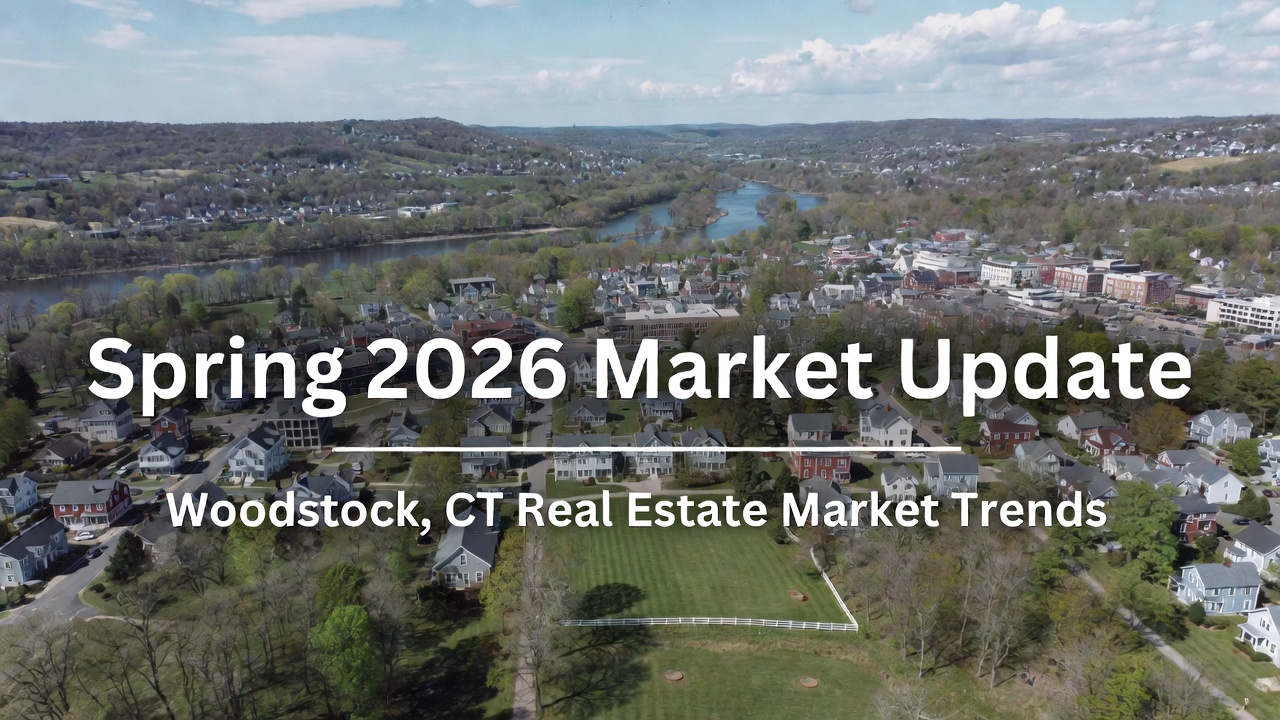
If you want to be in a home sooner, or if your budget is tighter, the existing housing stock in the Quiet Corner offers tremendous value. Our market update for Woodstock shows what is available, and many buyers find that an existing home on great land meets their needs without the complexity of a ground-up build.
Thinking about buying land in the Quiet Corner? MLD Realty has helped buyers find and evaluate parcels throughout northeastern Connecticut. Contact us to explore available land and understand the building process.