You Love Where You Live. You Just Do Not Need All the Space.
It is a conversation happening in kitchens across northeastern Connecticut. The kids have moved out. The five-bedroom Colonial feels empty. The acreage that once held horses or a big garden now feels like a lot to maintain. The barn needs a new roof. The driveway takes 45 minutes to plow. And the heating bill for all that unused space keeps climbing every year.
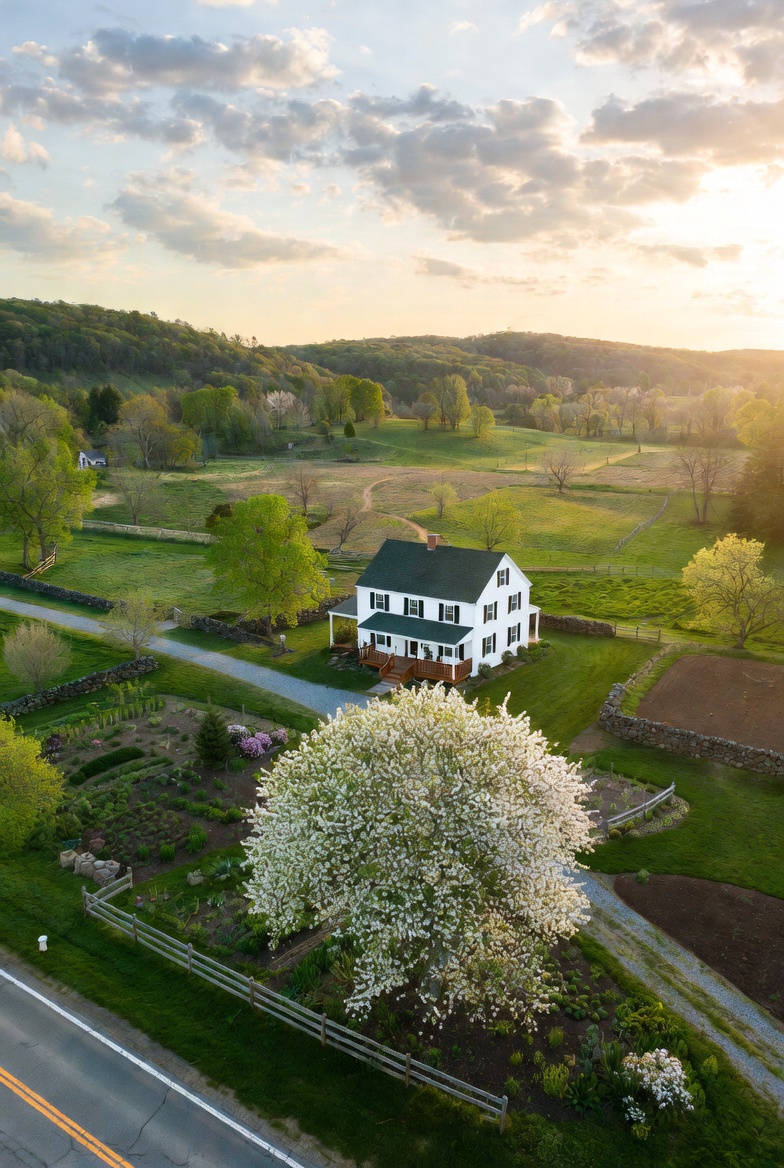
But the thought of leaving Woodstock, Pomfret, or Eastford? That does not sit right either. You love the community. You love the land. You love the way the light hits the stone walls on an October morning. You just do not need 3,000 square feet and five acres to enjoy it.
The good news is you do not have to leave. Downsizing in the Quiet Corner is not about moving away. It is about moving smarter, freeing up equity, reducing your maintenance burden, and creating a living situation that matches where you are in life right now rather than where you were twenty years ago.
This guide walks through the practical, financial, and emotional sides of downsizing in northeastern Connecticut, because this decision deserves more than a quick conversation. It deserves a plan.
Why Homeowners Are Downsizing Now
Several forces are converging to make this the right time for many long-time homeowners to make a move.
The Inventory Picture
Connecticut has seen a dramatic drop in new listings over the past decade, from over 5,235 in 2016 to fewer than 2,743 in 2026. Part of the reason is that many baby boomers have stayed in their family-sized homes longer than previous generations, locked into low mortgage rates or simply attached to properties they have lived in for decades. But the tide is shifting, and more homeowners are recognizing that the market conditions right now are exceptionally favorable for sellers.
The spring 2026 market update for Woodstock shows the Windham County median sale price at $360,000, up 5.9% year over year. Average home values across the county have climbed to $315,518, up 3.7% over the past year. For homeowners sitting on larger, higher-value properties, this steady appreciation means your equity position is likely the strongest it has ever been.
Rising Costs on Large Properties
The financial pressure of maintaining a large home on acreage is real and growing:
- Property taxes and insurance keep rising. A smaller home on a smaller lot means meaningfully lower annual costs
- Maintenance is exhausting. That barn roof that needs replacing, the 300-foot gravel driveway that needs grading every spring and plowing every storm, the three acres of mowing every week from May through October. It adds up in both dollars and physical effort
- Heating costs are significant. Oil heat for a 2,800 square foot Colonial can run $3,000 to $4,500 per winter. A 1,200 square foot ranch costs a fraction of that
- Deferred maintenance compounds. Every year you put off that well pump replacement, that septic system service, or that roof repair, the eventual cost grows
Lifestyle Priorities Change
This is the piece that no spreadsheet captures but every downsizer understands. Travel, hobbies, grandchildren, volunteer work, and simple flexibility become more important than square footage. The freedom to lock the door and leave for three weeks without worrying about the property is worth more than a guest bedroom that gets used twice a year.
Many of the homeowners we work with describe a similar moment: they looked around at all the space they were heating, cleaning, maintaining, and paying taxes on, and realized that the house was running their life instead of the other way around.
What Downsizing Looks Like in the Quiet Corner
In the Quiet Corner, downsizing does not mean moving to a faceless condo complex in a town you have never heard of. The options here reflect the character of the region itself, and most of them allow you to stay deeply connected to the community you love.
Smaller Homes on Manageable Lots
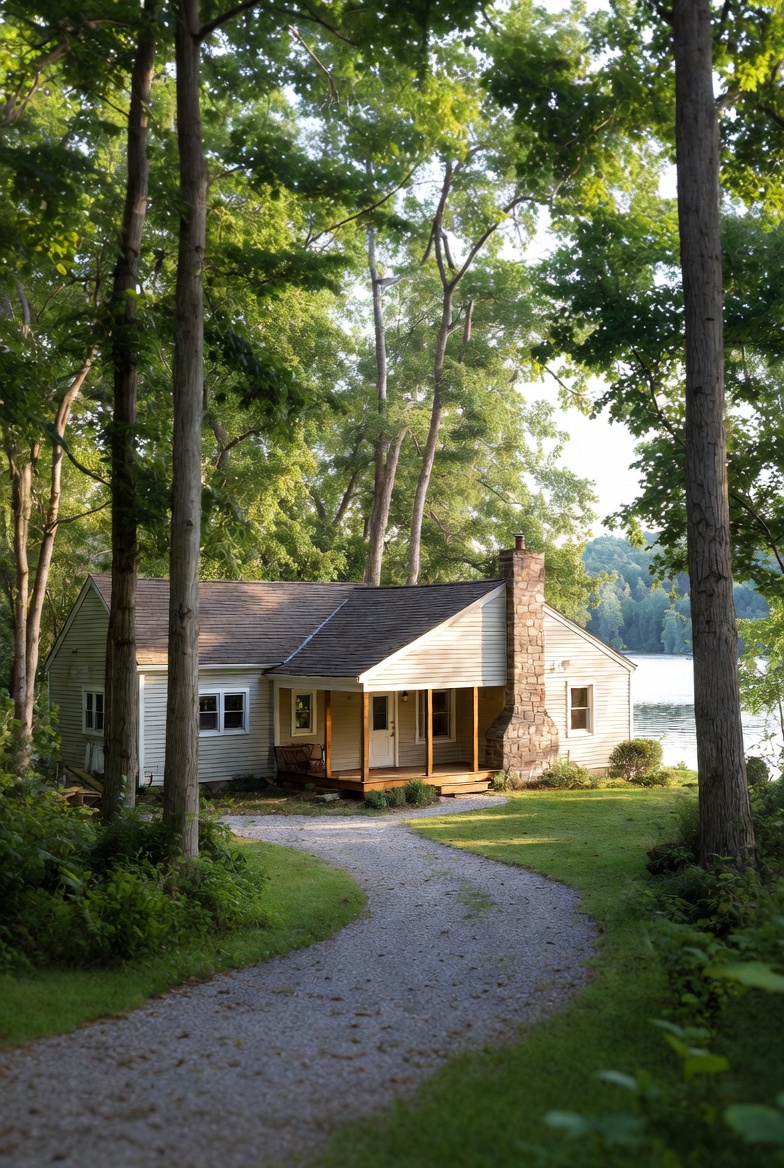
This is the most common path. Sell the large Colonial on five acres and purchase a well-maintained cape or ranch on one to two acres, ideally close to town. These properties still give you a garden, a yard for the grandchildren, and enough space to breathe, but without the burden of maintaining a small estate.
In Woodstock, homes in the $300,000 to $400,000 range offer solid, comfortable living on manageable lots. If you are coming from a property valued at $500,000 or above, the transition frees up significant equity while keeping you in the same community.
Village Living
Homes within walking distance of Woodstock Hill, Putnam's antique district, or Pomfret Center offer something that rural properties cannot: walkability and daily social interaction. Village living in the Quiet Corner means you can walk to the post office, stroll to a neighbor's house, and feel the pulse of the community without getting in your car. Several homeowners who have made this transition describe it as the best of both worlds, because you are still surrounded by farmland and stone walls, but your daily life is more connected and less isolated.
Our neighborhood guide to Woodstock covers the different areas of town and what each one offers, which is helpful if you are considering moving from one part of Woodstock to another.
In-Law and Accessory Dwelling Setups
Some homeowners are getting creative. Instead of selling the family property entirely, they build or convert a smaller accessory dwelling on the same land and sell or pass the main house to a family member. This keeps the property in the family while giving the downsizer a right-sized home with lower costs.
Connecticut has been expanding regulations around accessory dwelling units in recent years, making this option more accessible. Check with your town's planning and zoning office about the current rules in your specific municipality.
New Construction
A handful of builders in the area are creating energy-efficient smaller homes designed for aging in place. These feature single-floor living, wider doorways, step-free entries, and low-maintenance exteriors like composite siding and metal roofing. While new construction inventory in the Quiet Corner is limited, these purpose-built homes offer the lowest ongoing maintenance costs and the best energy efficiency of any option.
The Financial Upside: Running the Numbers
For many downsizers, the math is the most compelling part of the conversation. Here is what a typical scenario looks like:
The Equity Play
Imagine you own a four-bedroom Colonial on four acres in Woodstock, currently valued at $525,000. You purchased it 25 years ago for $210,000 and your mortgage is paid off. You sell, pay the transaction costs, and net approximately $475,000 to $490,000 after agent commissions, the Connecticut conveyance tax, attorney fees, and other closing costs.
You then purchase a well-maintained ranch on 1.5 acres for $340,000. After your purchase closing costs, you have freed up roughly $130,000 to $145,000 in cash, which goes directly into your retirement savings, your travel fund, or wherever it serves you best.
Understanding Your Closing Costs
Both the sale and the purchase come with costs that you should plan for. On the selling side, Connecticut's conveyance tax runs 0.75% on the first $800,000 of the sale price, plus a municipal tax of 0.25% to 0.50% depending on your town. Attorney fees for a straightforward closing typically run $750 to $1,250. Agent commissions are negotiable but represent the largest transaction cost.
On the buying side, you will pay title insurance, attorney fees, recording fees, and potentially lender fees if you are financing the purchase. For a complete line-by-line breakdown, our guide to closing costs in CT and RI covers every expense you will encounter.
Ongoing Savings
The annual savings from downsizing add up quickly:
- Property taxes on a $340,000 home versus a $525,000 home can save you $1,500 to $3,000 or more per year depending on the mill rate
- Heating costs drop dramatically. That 1,200 square foot ranch with modern insulation might cost $1,200 to $1,800 to heat per winter, compared to $3,000 to $4,500 for the larger Colonial
- Maintenance expenses decrease significantly. No more barn repairs at $5,000 to $15,000 per project. No more $150 per storm for plowing a long driveway. No more weekend-consuming mowing sessions on three acres
- Insurance premiums are typically lower on smaller, newer, or better-maintained homes
- Utility costs across the board, from electricity to water (if on a well, lower pump usage on a smaller system), run less on a right-sized property
Over a 10-year period, the combination of freed equity and reduced annual costs can represent $200,000 or more in financial benefit. That is not a small number, and it is why so many financial advisors encourage their clients to right-size their housing as they enter retirement.
Preparing Your Home for Sale
If you are going to sell a home you have lived in for two or three decades, the preparation process is different from someone selling a home they bought five years ago. The key is starting early and being strategic.
Start With Curb Appeal
In the Quiet Corner, buyers fall in love with properties from the driveway. The stone walls, the mature landscaping, the classic New England architecture, these are your biggest selling points, and they need to shine. Our guide to boosting curb appeal covers specific projects you can tackle in a weekend that make a meaningful difference in how buyers perceive your home.
Power-wash the siding, clear the brush from the stone walls, edge the garden beds, and add seasonal plantings near the front door. If you have a barn or outbuilding, make sure it looks maintained even if it is not in active use. Buyers in this market are drawn to the story that the property tells from the road, and that story should say "cared for" rather than "overwhelming."
Price It Right From Day One
This is where many downsizers make a costly mistake. After living in a home for 25 years, there is a natural tendency to overvalue it based on emotional attachment and the cumulative investment you have made. But the market does not care what you spent on the kitchen remodel in 2014. It cares about what comparable homes are selling for right now.
The guide to pricing mistakes that keep homes on the market covers this in detail, but the short version is this: in a small market like Woodstock, overpricing is especially costly. Buyers compare every listing, and a home that sits too long starts to develop a reputation. The first two weeks on market are your golden window, and you get the best results by pricing accurately from the start.
Timing Your Sale
Spring is the strongest selling season in northeastern Connecticut. The landscape looks its best, families are motivated to settle before the school year, and buyer activity peaks between March and June. If you are planning to downsize, targeting a spring listing gives you the largest pool of motivated buyers and the best chance of a strong sale price.
That said, do not rush the preparation process just to hit a calendar date. A well-prepared home listed in May will outperform a hastily listed home in March every time.
What to Do With All That Stuff
This is the part nobody talks about enough, but it is often the biggest hurdle in the entire downsizing process. After 25 or 30 years in a home, the accumulation is real. Attics, basements, garages, barns, and closets filled with decades of living. Furniture that will not fit in the new space. Collections that once brought joy but now feel like weight.
Start early. Ideally, begin the decluttering process 6 to 12 months before you plan to list.
A Room-by-Room Approach
Go through the house one room at a time. For each item, ask yourself: does this fit in the home I am moving to? If the answer is no, it goes into one of three categories: donate, sell, or discard.
- Donate: Local resources like TEEG (Thames Valley Council for Community Action) and area churches accept furniture, household goods, and clothing. Many will pick up large items
- Sell: Estate sale companies can handle the entire process if the volume is overwhelming. They price, display, staff, and manage the sale for a percentage of the proceeds. For higher-value individual items, consignment shops in Putnam's antique district are another option
- Discard: For items that cannot be donated or sold, your local transfer station handles most household items. For larger cleanouts, a dumpster rental runs $300 to $500 for a 15 to 20 yard container
The Sentimental Items
The hardest part is not the old furniture or the kitchen gadgets. It is the kids' artwork, the photo albums, the handmade items that carry memories. Give yourself permission to keep these, even if they take up space. The goal is not to strip your life down to nothing. It is to right-size your possessions so they fit your new life without weighing you down.
Photograph items you want to remember but do not need to keep. Create memory boxes for each family member. Offer heirlooms to your children before donating them. And give yourself grace through the process, because it is genuinely hard.
The Emotional Side of Downsizing
Let us be honest about this, because pretending it is easy does a disservice to everyone going through it. Downsizing is not just a financial decision. It is emotional in ways that catch even the most practical people off guard.
You raised your family in that house. The height marks on the doorframe measure your children's growth from kindergarten through high school. The garden your spouse planted twenty years ago blooms every spring without being asked. The view from the kitchen window is the first thing you see every morning and has been for decades.
Leaving that behind, even when you are moving to something better suited to your current life, involves grief. And acknowledging that grief does not make you sentimental or unreasonable. It makes you human.
Reframing the Move
The downsizers who navigate this transition most successfully are the ones who focus on what they are gaining rather than what they are losing:
- Less maintenance means more freedom to travel, to visit family, and to pursue interests that got squeezed out by the demands of a large property
- A smaller home means less time cleaning, less time worrying about repairs, and more time doing what you actually enjoy
- Freed equity means financial security and flexibility that enhances every aspect of your retirement
- A right-sized home means the space you do have is fully used and fully enjoyed, rather than rooms that sit empty and cold
Many of the homeowners we have worked with through this process say the same thing six months after the move: they wish they had done it sooner.
The Buying Side: Finding Your Next Home
Once you have decided to downsize, the search for your next home begins. And this is where the process gets fun again.
What to Look For
Your priorities at this stage of life are likely different from when you bought your current home. Consider:
- Single-floor living or at minimum a first-floor primary bedroom suite, which makes aging in place practical
- Low-maintenance exteriors like vinyl or composite siding, and manageable lot sizes that do not require a riding mower
- Updated mechanical systems including a newer furnace, hot water heater, and electrical panel. These are expensive to replace, and buying a home where they are already current saves you future headaches
- Proximity to services including grocery stores, medical offices, and community centers. This becomes more important as you age
- Broadband internet for staying connected with family, telehealth appointments, and entertainment
Working With a Local Agent
In a market as specific as the Quiet Corner, working with an agent who truly knows the area is essential on both the selling and buying side. A local agent knows which streets are quiet, which properties have good well water, which homes were well maintained by their previous owners, and which ones have hidden issues. They can also help you coordinate the timing of your sale and purchase so you are not left without a home or carrying two properties simultaneously.
Inspections Still Matter
Even if you have owned homes for decades and feel confident in your ability to evaluate a property, a professional home inspection is essential when buying your next home. You want to know the condition of the roof, the age of the septic system, the water quality from the well, and any deferred maintenance that could become your problem. The few hundred dollars an inspection costs is nothing compared to the surprises it can prevent.
A Note for the Family
If you are the adult child of someone considering this transition, here is what helps most: support their timeline, respect their emotions, and avoid rushing the process. Downsizing is deeply personal, and the best thing you can do is show up when asked, help sort when invited, and let them make the decisions about what stays and what goes. Your parents are not just moving houses. They are closing a chapter, and that chapter includes you.
The Path Forward
Downsizing in Connecticut's Quiet Corner is one of the smartest financial and lifestyle decisions a long-time homeowner can make. The market favors sellers right now, the inventory of right-sized homes is growing, and the community you love is not going anywhere. You are simply choosing to enjoy it from a home that fits your life as it is today.
The process takes time, planning, and emotional honesty. But the result, for nearly everyone who goes through it, is a sense of relief, freedom, and excitement about what comes next.
Thinking about downsizing in the Quiet Corner? MLD Realty understands both the practical and emotional sides of this transition. Contact us for a confidential conversation about your options.