
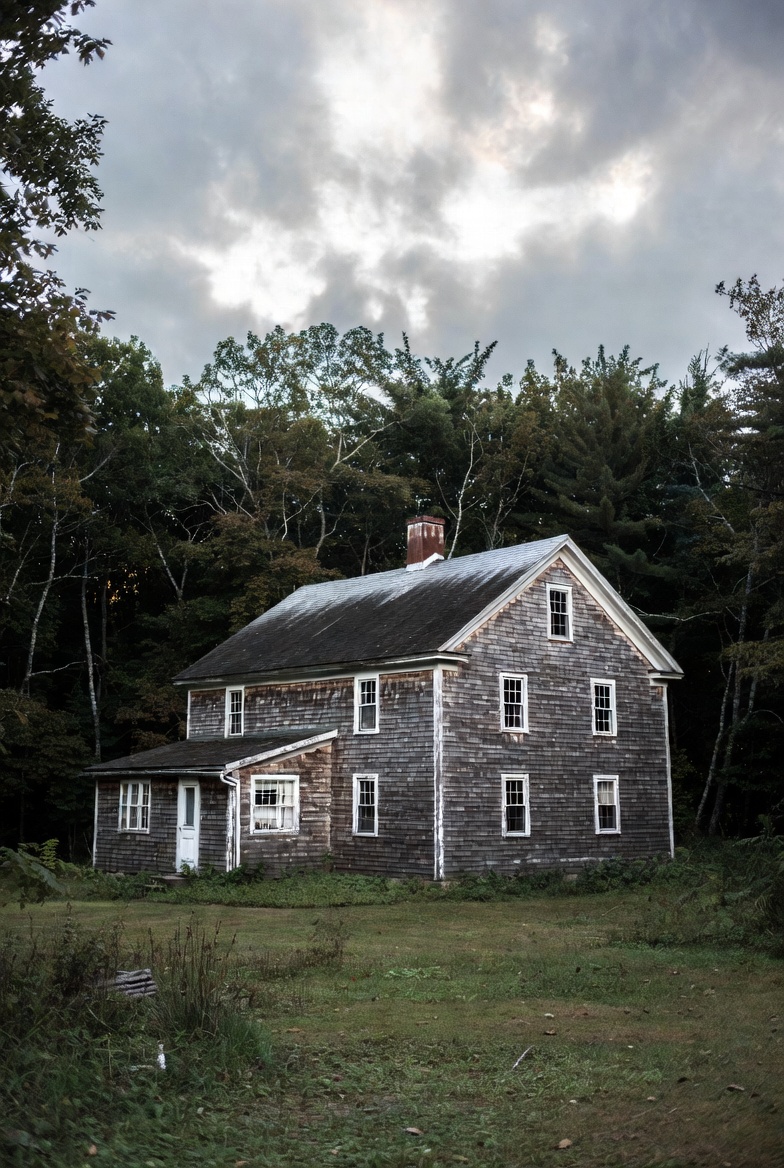
The Allure Is Real. So Are the Hidden Costs.
There is something magnetic about an old New England home with good bones. The wide-plank floors, the hand-hewn beams, the stone fireplace that has warmed the same room for 200 years. These are the homes that stop you mid-scroll on a listing site and make you whisper to yourself, "I could do something with this."
And you probably can. Fixer-uppers in northeastern Connecticut and coastal Rhode Island offer some of the best value in the market right now. A property listed at $275,000 that needs $80,000 in work can become a $425,000 home when you are done. But the gap between "I could do something with this" and "I should have known about that" is where fixer-upper dreams either flourish or fall apart.
This guide covers the most common issues hiding in older New England homes, what they cost to fix, how to finance a renovation purchase, and how to tell the difference between a project worth tackling and a money pit you should walk away from.
What "Fixer-Upper" Really Means in This Market
In the Woodstock CT market, where the Windham County median sale price is $360,000, a fixer-upper typically falls in the $200,000 to $350,000 range. These are homes with functional structures but deferred maintenance, outdated systems, or cosmetic neglect. In Charlestown RI, where average home values reach $617,861, the fixer-upper entry point is higher, often $350,000 to $500,000, but the upside potential is also greater given the strength of the coastal market.
The key distinction is between cosmetic fixer-uppers and structural fixer-uppers. A cosmetic project, think dated kitchens, old carpet, tired paint, and overgrown landscaping, is manageable and predictable. A structural project involving foundation work, roof replacement, complete rewiring, or environmental remediation is a different animal entirely.
Both can be worthwhile investments. But you need to know which one you are buying before you make an offer.
The Big Five: Common Issues in Older New England Homes
1. Electrical Systems
Homes built before 1940 may still have knob-and-tube wiring, which was the standard electrical system of its era. It is not inherently dangerous when properly maintained, but it cannot handle the electrical demands of modern living. Most insurance companies either refuse to cover homes with active knob-and-tube or charge significant premiums.
What to expect: A full rewire of a 1,500 to 2,000 square foot home runs $8,000 to $25,000 depending on accessibility and the complexity of the layout. Homes with plaster walls and limited access points are on the higher end because electricians need to fish wires through tight spaces without destroying the walls.
The inspection angle: A qualified home inspector will identify knob-and-tube wiring, but you should also hire a licensed electrician for a dedicated electrical evaluation. The inspector gives you the overview; the electrician gives you the actual scope and cost.
2. Foundations
Fieldstone foundations are a hallmark of New England homes built before 1900. These foundations are made of stacked stones held together by mortar (or sometimes just gravity), and over a century or two, they develop issues. Mortar deteriorates, stones shift, water finds its way in, and the basement becomes a damp, musty space that affects the entire house above it.
What to expect: Repointing (replacing deteriorated mortar between stones) runs $5,000 to $15,000 for a typical basement. More serious structural repairs, including lifting and stabilizing walls or pouring a new foundation alongside the existing one, can run $20,000 to $50,000 or more. Waterproofing an old basement with drainage and sump pump systems adds $5,000 to $15,000.
Red flags: Visible bowing in foundation walls, large gaps between stones, persistent standing water, and doors or windows that do not close properly due to settling. Some settling is normal in old homes. Rapid or recent movement is cause for concern.
A Connecticut-specific warning: crumbling foundations. Homes built roughly 1983 to 2017 in parts of northeastern Connecticut may contain concrete foundations made with aggregate from a quarry in Willington, CT. The aggregate contains pyrrhotite, a mineral that causes concrete to crack and deteriorate over time. Replacement costs run $150,000 to $300,000 or more. Connecticut established the Crumbling Foundations Assistance Fund to help affected homeowners, but the issue remains serious. Look for a map-cracking pattern and rust-colored staining on the foundation walls. If you are buying in Windham or Tolland County, a foundation inspection that specifically evaluates for pyrrhotite is strongly recommended.
3. Environmental Hazards
Three environmental issues are common in older New England homes:
Lead paint is present in virtually every home built before 1978. In Connecticut and Rhode Island, sellers must disclose known lead paint and provide buyers with the EPA pamphlet. Testing costs $300 to $500 for a comprehensive assessment. Abatement costs vary wildly depending on scope, from $2,000 for targeted removal in a few rooms to $20,000 or more for a full-house abatement. Many homeowners choose encapsulation (covering lead paint with approved sealants) rather than full removal, which is less expensive and equally effective when done correctly.
Asbestos was used extensively in insulation, floor tiles, siding, and pipe wrapping through the 1980s. If the material is intact and undisturbed, it poses minimal risk. But renovation work that disturbs asbestos-containing materials requires professional abatement, which can cost $2,000 to $30,000 depending on the extent and location.
Underground oil tanks are the sleeper issue that catches buyers off guard. Many older homes had heating oil tanks buried in the yard. If the tank has leaked, the environmental cleanup can cost $10,000 to $100,000 or more. Before purchasing any property with a history of oil heat, ask whether there was ever an underground tank, request documentation of its removal, and consider a soil test near the former tank location. Above-ground tanks in basements should be inspected for signs of leakage, and many insurance companies are phasing out coverage for older above-ground tanks as well.
4. Roofing and Structure
New England weather is relentless. Roofs take the worst of it, from heavy snow loads to ice dams to summer storms. A roof replacement on a typical New England home runs $10,000 to $25,000 depending on size, pitch, and material. Architectural shingles are standard, with a 30-year expected lifespan.
Beyond the roof itself, look at the structural framing. Sagging ridgelines, cracked rafters, and evidence of past water damage in the attic all indicate structural concerns that go deeper than a new layer of shingles can solve.
The ice dam issue: Homes with inadequate attic insulation and ventilation develop ice dams in winter, where melting snow refreezes at the eaves and forces water back under the shingles and into the walls. The damage from chronic ice dams can be extensive and invisible from the outside. Ask about past ice dam issues and inspect the attic for water staining along the eaves.
5. Plumbing
Galvanized steel pipes were standard in homes built before the 1960s, and they have a finite lifespan. Over time, galvanized pipes corrode from the inside, reducing water pressure and eventually leaking. A full replumb of a 1,500 square foot home with PEX or copper runs $5,000 to $15,000.
Older homes may also have outdated sewage connections or, in rural areas, aging septic systems that are at or beyond their useful life. A thorough understanding of well and septic systems is essential for any rural fixer-upper purchase.
How to Finance a Fixer-Upper
Traditional mortgages are based on the current value of the home, which means they often fall short of covering both the purchase and the renovation costs. Fortunately, several financing options exist specifically for renovation purchases.
FHA 203(k) Loans
The FHA 203(k) loan is the most popular renovation financing option. It allows you to roll the purchase price and renovation costs into a single mortgage, with a down payment as low as 3.5%. There are two versions:
- Standard 203(k): For major renovations over $35,000, including structural work. Requires a HUD consultant to oversee the project
- Limited 203(k): For cosmetic and non-structural work up to $35,000. Simpler process, no consultant required
If you are a first-time buyer, this loan can be combined with down payment assistance programs available in both Connecticut and Rhode Island, making a fixer-upper purchase surprisingly accessible.
Fannie Mae HomeStyle Renovation Loan
Similar to the 203(k) but with higher loan limits and fewer restrictions on the types of work allowed. Requires a higher credit score (typically 620+) and a larger down payment (5% minimum for primary residence).
Home Equity Options
If you already own a home and are purchasing a fixer-upper as a second property or investment, a home equity line of credit (HELOC) on your existing property can provide flexible renovation funding with favorable interest rates.
Cash Reserves
Whatever financing option you choose, keep a cash reserve of 15 to 20% above your estimated renovation budget. Every fixer-upper reveals surprises once the walls open up, and having a financial cushion prevents the project from stalling at a critical stage.
The Inspection: Your Most Important Investment
On a fixer-upper, the inspection is not a formality. It is the foundation of your entire renovation plan and budget. Here is how to approach it:
- Hire an inspector who specializes in older homes. General inspectors may not recognize the specific issues that come with antique New England construction
- Budget for supplementary inspections: structural engineer for foundation concerns, electrician for wiring evaluation, septic system evaluation, well water testing, and environmental testing for lead, asbestos, and oil contamination
- Use the inspection report as a renovation roadmap, not just a negotiation tool. Every item the inspector flags becomes a line item in your renovation budget
For detailed guidance on what inspections reveal and how to interpret the findings, our home inspection guide covers the full process.
Historic Homes: Special Considerations
If the fixer-upper you are eyeing is a designated historic property, additional considerations apply:
- Historic district regulations may restrict exterior modifications, window replacements, additions, and even color choices. Check with your local historic district commission before assuming you can make changes
- CT Historic Tax Credits offer dollar-for-dollar tax credits for qualifying renovation expenses on eligible historic properties. The program can significantly offset renovation costs, but the application process requires planning and documentation
- Character-defining features like original windows, trim, and hardware add value and should be preserved when possible. Replacement windows may be more energy-efficient, but original wood windows, properly restored, can perform nearly as well and add significantly more value to a historic home
When to Walk Away
Not every fixer-upper is worth fixing. Here are the situations where the smartest move is to keep looking:
- The math does not work. If the purchase price plus realistic renovation costs exceeds the after-renovation value by more than 10%, the project is upside-down financially
- Structural failure is advanced. A foundation that has shifted significantly, a roof structure that has collapsed, or major structural members that have rotted through can cost more to repair than the home is worth
- Environmental contamination is extensive. A leaking underground oil tank with confirmed soil contamination can result in remediation costs that eclipse the value of the property
- The location does not support the investment. A beautifully renovated home on a busy road, next to a commercial property, or in an area with declining values may never recover its renovation costs
The difference between a smart fixer-upper purchase and a bad one almost always comes down to accurate information. Get the right inspections, run the real numbers, and work with a local agent who can tell you honestly whether the investment makes sense.
The Payoff
When a fixer-upper works, the rewards go beyond the financial. There is a deep satisfaction in taking a neglected home and bringing it back to life. In watching a kitchen that was last updated in 1975 become the heart of your home. In knowing that the wide-plank pine floors under your feet have supported families for generations and will support yours for generations to come.
In markets like Woodstock and Charlestown, where character and history matter as much as square footage and finishes, a thoughtfully renovated fixer-upper is often the most admired home on the road. And the story of how you got there, the sweat equity, the discoveries behind the walls, the moment you realized the original fireplace mantel was hiding under three layers of drywall, becomes part of the home's story and yours.
Considering a fixer-upper in Woodstock CT or Charlestown RI? MLD Realty can help you evaluate the potential, connect with trusted inspectors and contractors, and find the right property for your renovation goals. Contact us to start the conversation.