Your Office View Could Be a Stone Wall and a Meadow
The morning commute is 14 steps from the bedroom to the room with the best light. The coffee is made in your own kitchen, the way you like it. The window over your desk frames a view of rolling farmland, a stone wall that has been there since before the Revolutionary War, and maybe a red-tailed hawk circling the hayfield next door. Your meeting starts in ten minutes, and you are wearing slippers.
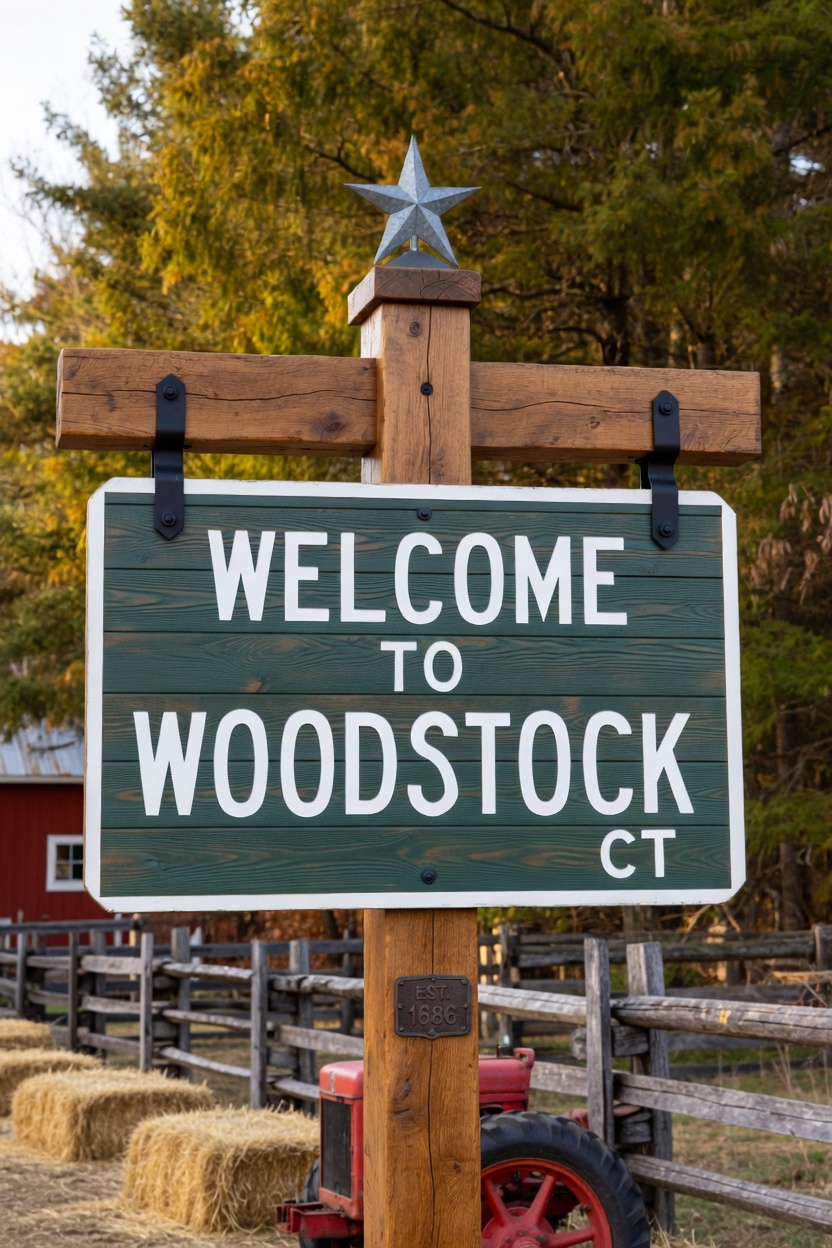
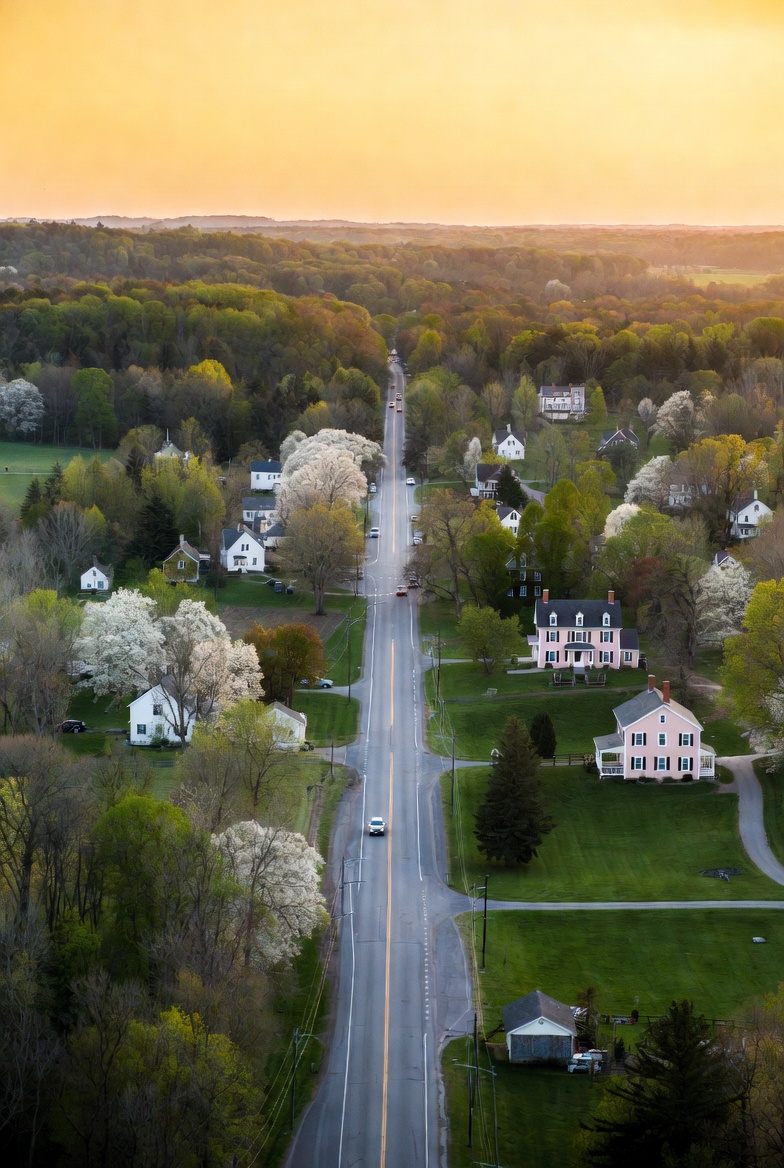
This is not a fantasy. It is Tuesday morning for a growing number of professionals who have traded metro apartments and suburban split-levels for homes in Connecticut's Quiet Corner, the rural northeastern pocket of the state where towns like Woodstock, Pomfret, Eastford, and Putnam offer a quality of life that most remote workers did not know was accessible until the world changed in 2020.
Connecticut gained 9,853 net remote workers who relocated to the state in recent years, making it the sixth-highest net gainer in the country. A notable share of that growth landed in Windham County, drawn by housing prices that feel almost unreal compared to Boston, New York, or even Hartford, and by the kind of space, quiet, and community that simply does not exist within commuting distance of a major city.
The Math That Starts the Conversation
The financial case for relocating to the Quiet Corner as a remote worker is not subtle. It is dramatic.
Housing
The Windham County median sale price is $360,000, up 5.9% year over year. In Woodstock specifically, the median listing price is higher at approximately $578,000, reflecting the town's premium character. But solid, comfortable homes are available throughout the region in the $300,000 to $450,000 range.
Compare that to where many remote workers are coming from:
| Location | Median Home Price | What $400K Buys | |---|---|---| | Boston metro | $750,000+ | A condo with no outdoor space | | Fairfield County CT | $600,000+ | A modest ranch on a small lot | | Providence metro | $425,000+ | A standard 3-bed in a decent neighborhood | | Quiet Corner CT | $315,000-$360,000 | A 3-4 bed home on 1-3 acres with a yard, a garden, and space to breathe |
The gap is stark, and for a remote worker earning a metro-area salary, the purchasing power in the Quiet Corner is transformative. A down payment that covers 10% of a Boston condo covers 20% of a home on acreage in Woodstock.
Monthly Expenses
Beyond the mortgage, the Quiet Corner offers meaningful savings:
- No commuting costs: Eliminate $200 to $500 per month in gas, tolls, parking, or train passes
- Lower childcare costs: More affordable than metro rates, with some families finding the flexibility of remote work reduces childcare needs entirely
- Lower dining and entertainment spending: Not because there is nothing to do, but because the lifestyle shifts toward home cooking, outdoor recreation, and community events that are free or low-cost
- Property taxes: Generally lower than in Fairfield or Hartford County, though Woodstock's mill rate supports quality services including Woodstock Academy
The net savings for a typical remote-working household relocating from the Boston metro area can exceed $2,000 to $3,000 per month, which compounds into life-changing money over a few years.
The Internet Question (Answered Honestly)
Every remote worker asks the same first question: "What is the internet like?"
The honest answer, which our relocation guide covers in detail, is that it depends on the specific property. This is not a cop-out. It is the reality of rural infrastructure, and it is the single most important factor you need to verify before purchasing.
The Good News
- Several areas of Woodstock and the surrounding towns have cable internet from regional providers, delivering speeds of 100 to 500 Mbps
- Connecticut has been investing in broadband expansion, and coverage in Windham County has improved significantly over the past three years
- Starlink satellite internet has become a reliable backup or primary option, delivering 50 to 200 Mbps with latency that supports video calls and cloud-based work. The equipment costs roughly $599 upfront with $120 per month service fees
- Fixed wireless providers have expanded coverage in some areas, offering 25 to 100 Mbps connections
The Caveat
- Not every address has the same options. Two homes on the same road can have different availability
- DSL-only areas still exist, and DSL speeds (5 to 25 Mbps) may not support demanding remote work (video conferencing, large file uploads, cloud-based applications with multiple users)
- Cell coverage is spotty in some valleys and wooded areas. WiFi calling at home solves this, but you may hit dead zones on certain back roads
The Solution
Before making an offer on any property, verify internet availability at that exact address. Not the town. Not the road. The address. Call the providers directly, because online availability maps are not always accurate in rural areas. If your work requires reliable, high-speed connectivity, make internet verification a condition of your search from the start. A local agent who knows the area can tell you which areas have reliable service and save you time looking at properties that will not work.
The Home Office: What Remote Workers Look For
The Quiet Corner housing stock offers something that metro-area homes rarely do: space. And space is what a remote worker needs most.
Dedicated Office Space
In the $300,000 to $450,000 range, most homes in the Quiet Corner offer three to four bedrooms, which means dedicating one room entirely to a home office is practical, not a luxury. Many properties also include bonus spaces: finished attics, sunrooms, or above-garage rooms that make ideal offices with natural light and separation from the main living areas.
Outbuilding Conversions
This is where the Quiet Corner really shines. Properties in this area frequently come with barns, detached garages, workshops, or other outbuildings that can be converted into spectacular home offices. The separation from the main house creates a psychological boundary between work and home that is genuinely beneficial for remote workers.
Converting a barn or outbuilding to office space typically costs $15,000 to $40,000 depending on the scope (insulation, electrical, heating, internet wiring, and finishes), and the result is a workspace that no co-working membership can match.
The Environment Factor
Remote workers who move to the Quiet Corner consistently report increased productivity and creativity. The reasons are intuitive:
- Quiet. No traffic noise, no construction, no sirens. Just the kind of deep quiet that allows sustained focus
- Natural light and views that reduce screen fatigue and improve mood
- The ability to take a 15-minute break by walking through actual woods rather than around a parking lot
- Separation from urban distractions and the constant stimulation that erodes attention
This is not just anecdotal. Studies on remote work satisfaction consistently find that workers in lower-density, natural settings report higher job satisfaction and lower burnout rates than their urban counterparts.
The Lifestyle: What You Gain
Beyond the financial case, the lifestyle shift is what converts visitors into residents.
Time
Remote workers who move to the Quiet Corner gain back the hours they used to spend commuting. Even a modest 45-minute each-way commute represents 7.5 hours per week, or roughly 375 hours per year. That is nine full work weeks recovered annually. This time goes toward family, hobbies, exercise, sleep, and the kind of unhurried morning routine that used to feel impossible.
Outdoor Access
Your lunch break can be a walk through fields, along a river, or on trails that start at your back door. Weekend recreation does not require driving to a trailhead or reserving a tee time. It is right there, in your yard and the conservation land that weaves through the Quiet Corner like a green thread.
Route 169, which runs through Woodstock, is a National Scenic Byway, and driving it on a fall afternoon is one of the most beautiful experiences in all of New England. The Quinebaug River offers kayaking and fishing minutes from home. State forests and parks provide miles of hiking and mountain biking trails.
Community
Remote work can be isolating, especially in urban settings where neighbors are strangers. In the Quiet Corner, the community is actively welcoming. Putnam's First Fridays events, the Woodstock Fair, local farmers markets, volunteer fire department events, and the simple act of chatting with neighbors at the transfer station create social connections that form quickly and hold firmly.
Several remote workers who have relocated to the area describe the community as the unexpected benefit. They came for the housing prices and the space. They stayed for the people.
The Occasional Commute
Some remote workers are not fully remote. They go into an office one to three days per week, or they travel periodically for client meetings, conferences, or team gatherings.
From Woodstock, the commute times are:
- Hartford: ~50 minutes via I-395 and I-84
- Providence: ~55 minutes via Route 6 or I-395 South
- Worcester: ~40 minutes via Route 169 and I-395 North to the Mass Pike
- Boston: ~90 minutes to the city center, though South Station is reachable via Amtrak from neighboring towns
- New York City: ~3 hours, or 2.5 hours to Metro-North in New Haven
For a one or two day per week commute, these times are manageable. Many remote workers in the area describe their occasional commute as a fair trade for living in a place they love the other five or six days of the week.
Making the Move
If the Quiet Corner is calling to you, here is the practical path:
1. Visit first. Spend a long weekend. Drive the roads. Walk downtown Putnam. Eat at a local restaurant. Talk to residents. Feel the pace 2. Verify internet at target properties. This is non-negotiable for remote workers 3. Get pre-approved. The market moves, and when the right property appears, you need to act. Our first-time buyer guide covers the process if this is your first purchase 4. Work with a local agent. In a market this specific, local knowledge is the difference between finding the right home and settling for the wrong one 5. Plan for winter. Visit in January if you can. If you love the Quiet Corner in its hardest season, you will love it in every season
The remote workers who are happiest in the Quiet Corner are the ones who came with realistic expectations and an open mind. They did not expect urban convenience. They expected something different, and what they found was something better.
Ready to bring your remote career to the Quiet Corner? MLD Realty helps remote workers find homes with the space, connectivity, and quality of life they need. Contact us to start your search.